Leave Your Message
- Phone
- E-mail
- Whatsapp
- Wechat

-

-

-
-

Sourcing Knife Cut Noodles wholesale requires more than comparing prices on a supplier list. You need to inspect flour quality, cutting consistency, drying methods, packaging, and delivery controls. A useful starting point is the World Instant Noodles Association’s 2023 report, which recorded 123.1 billion instant noodle servings consumed worldwide. That figure shows enormous demand, but Knife Cut Noodles belong to a different quality conversation. Their broad, irregular edges must survive cooking without becoming gummy or tearing apart.
Fuchsia Dunlop, a respected authority on Chinese cuisine, writes, “Noodles are one of the great staples of northern Chinese cooking.” Her observation matters because regional noodle quality depends on texture, preparation, and cultural expectations—not volume alone. In practical sourcing, request production samples. Cook them in a standardized test pot. Check bite, thickness, flour aroma, and soup cloudiness after five minutes. Also compare carton strength. A crushed case can turn a profitable shipment into waste.
Market reports, including Grand View Research’s analysis of the global noodles market, indicate continued growth in convenience foods and Asian culinary products. Yet broad market growth does not guarantee a suitable wholesale partner. That assumption needs questioning. Ask for allergen documentation, batch codes, shelf-life evidence, food-safety certifications, and minimum order quantities. Confirm whether the supplier can maintain the same cut during peak seasons.
A low quotation may hide higher freight costs or inconsistent batches. Sometimes, the cheaper noodle is expensive. This guide explains how to evaluate suppliers, negotiate practical terms, and build a reliable Knife Cut Noodles purchasing process.
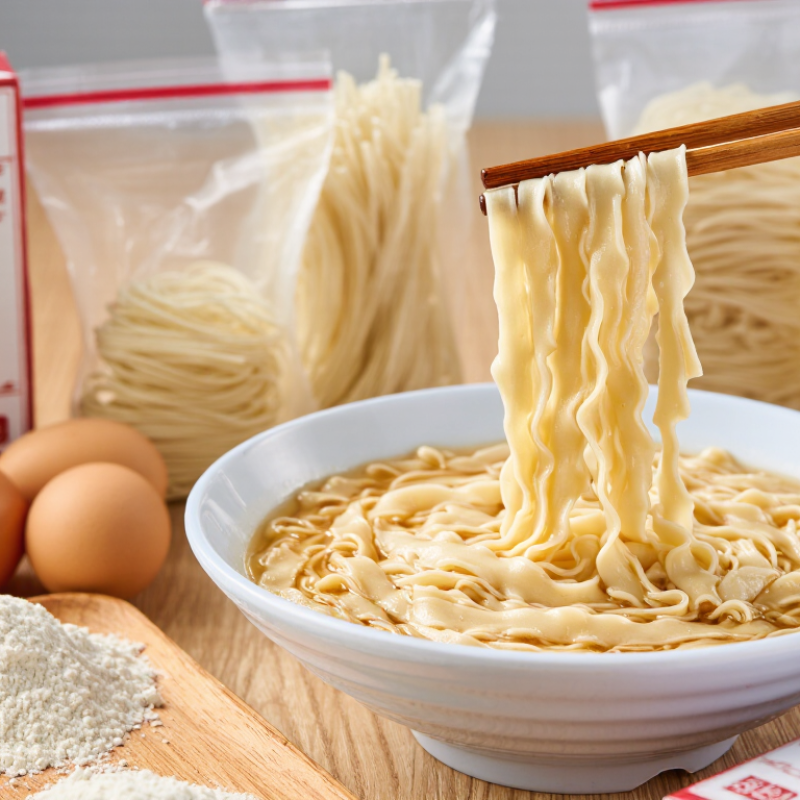
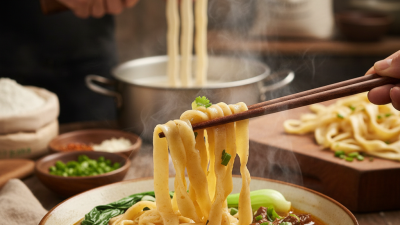
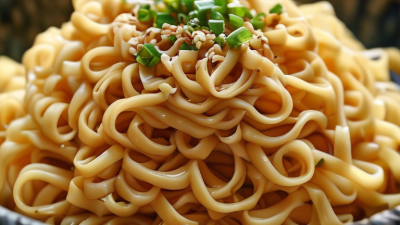
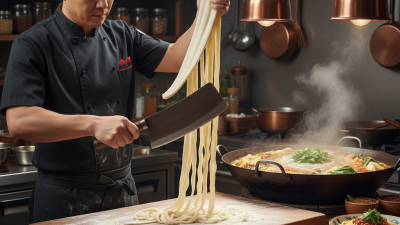
Knife-cut noodles are fresh or dried wheat noodles shaped by slicing dough directly from a dough block. This creates irregular edges and a firm, chewy bite. Thickness, moisture, flour strength, and drying temperature affect cooking performance. Wholesale buyers should define these details before requesting quotations. The 2023 Demand Report from the World Instant Noodles Association recorded 123.1 billion servings globally. That figure reflects broad noodle demand, not knife-cut noodles specifically. Still, it shows strong category familiarity among consumers.
Reliable sourcing requires measurable specifications. Request noodle width, length, moisture content, net weight, shelf life, and cooking time. Confirm whether the product contains eggs, additives, or allergen risks. Ask for production capacity, minimum order quantity, lead time, and carton dimensions. A practical supplier should provide batch samples and recent food-safety documents. Verify certificates through their issuing bodies when possible. Factory photos are useful, but they are not proof. A site audit remains stronger evidence.
Tips: Cook samples in actual store equipment, not only in a kitchen pot. Record texture after three, five, and eight minutes. Compare broken noodles, surface starch, and soup cloudiness. Check packaging after vibration and temperature changes. WINA data cannot predict your sales, and I would not trust a forecast based only on market size. One overlooked issue is replacement capacity during peak seasons. Ask for a written contingency plan before placing a large order.
| Data Dimension | Definition or Wholesale Requirement | Practical Specification or Benchmark | Recommended Verification |
|---|---|---|---|
| Product definition | Knife cut noodles are wheat-based noodles shaped by repeatedly shaving dough directly with a knife into boiling water or onto a preparation surface. | They normally have irregular, ribbon-like pieces with a chewy texture and a wider, more handmade appearance than uniformly extruded noodles. | Request product photographs, preparation videos, ingredient details, and a physical sample before placing a bulk order. |
| Raw material | The primary ingredient should be wheat flour, with water and any declared salt, alkaline ingredient, or processing aid listed according to the destination market’s rules. | Confirm the flour type, ingredient percentages where required, allergen statement, and whether the product contains egg or other optional ingredients. | Review the ingredient specification, allergen declaration, certificate of analysis, and applicable food-label documentation. |
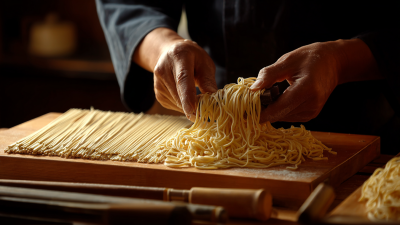
| Noodle shape | The product should retain the visual characteristics of knife-cut noodles rather than being marketed only as generic flat noodles. | Agree on an acceptable range for width, thickness, length, edge irregularity, and breakage. A typical dried flat noodle may be approximately 4–10 mm wide, but the contract specification should control. | Measure samples with a ruler or caliper and record the agreed tolerance in the purchase specification. |
| Product format | Wholesale products may be supplied fresh, chilled, frozen, or dried. Each format has different logistics, shelf-life, and handling requirements. | Dried noodles generally simplify long-distance transport; fresh, chilled, and frozen noodles require controlled temperature and faster delivery. | Confirm storage temperature, transport conditions, shelf-life at shipment, and delivery temperature records. |
| Moisture and shelf-life | Moisture level strongly affects stability, texture, microbial risk, and storage requirements. | For dried noodles, use the supplier’s validated moisture specification and shelf-life study rather than relying on a general industry assumption. Fresh products normally require much shorter storage periods. | Request moisture results, shelf-life validation, production date, expiry date, and batch traceability information. |
| Cooking performance | Wholesale buyers need consistent cooking time, chewiness, water absorption, and resistance to excessive softening. | Specify cooking time as a range, acceptable texture, soup clarity requirements, and whether the noodles are intended for soup, stir-frying, or foodservice preparation. | Conduct a standardized cooking test using the same water volume, boiling time, serving method, and sample weight for every supplier. |
| Food safety | The product must comply with food-safety legislation in both the manufacturing country and the importing market. | Evaluate sanitation controls, allergen management, foreign-material prevention, pest control, water quality, and microbiological testing appropriate to the product format. | Request current food-safety certificates, audit reports where available, laboratory test results, and a documented recall or traceability procedure. |
| Packaging | Packaging must protect the noodles from moisture, contamination, crushing, and temperature abuse during storage and transport. | Agree on inner-pack weight, outer-carton quantity, packaging material, seal integrity, carton strength, pallet configuration, and required retail or foodservice labeling. | Perform a packaging inspection and transit simulation or drop test for the final approved pack format. |
| Labeling | Labels should provide the information required by the destination market and accurately describe the product. | Include product name, ingredient list, allergen information, net weight, lot code, production or expiry date, storage instructions, cooking instructions, and importer details when required. | Have the label reviewed against the importing country’s regulations before printing bulk packaging. |
| Order quantity | The minimum order quantity should match the buyer’s sales forecast, storage capacity, cash flow, and product shelf-life. | Obtain separate quotations for sample orders, trial cartons, pallet quantities, and container-level orders. Do not assume that a lower unit price is cheaper after freight and storage costs. | Compare total landed cost, including product, packaging, inland transport, freight, duties, inspection, and temperature-controlled handling where applicable. |
| Production capacity | The supplier should be able to maintain consistent quality and delivery schedules at the buyer’s required volume. | Assess daily or monthly capacity, lead time, peak-season capacity, backup arrangements, and the ability to reserve production slots. | Request capacity information, recent production records, lead-time commitments, and references that can be independently checked. |
| Quality tolerance | The purchasing agreement should define what counts as an acceptable or defective batch. | Set measurable limits for broken noodles, incorrect weight, damaged packaging, off-odor, discoloration, foreign material, moisture deviation, and labeling errors. | Use a pre-shipment inspection checklist and, when appropriate, independent sampling and laboratory testing. |
| Commercial terms | Clear commercial terms reduce disputes concerning price, delivery, payment, inspection, and responsibility for loss or damage. | Document the quotation validity, currency, payment schedule, delivery term, lead time, packaging charges, sample charges, claims period, and replacement or refund policy. | Ensure the signed purchase agreement matches the approved sample, technical specification, packaging artwork, and final quotation. |
| Sourcing workflow | A structured sourcing process helps compare suppliers objectively and reduces quality and compliance risks. | Define requirements → screen suppliers → request documents → compare quotations → test samples → approve specifications → place a trial order → inspect shipment → review performance. | Maintain a supplier evaluation scorecard covering quality, compliance, price, capacity, communication, delivery, and corrective-action performance. |