Leave Your Message

10 Best Instant Noodles Suppliers for Global Buyers

Global sourcing of Instant Noodles is not just a price comparison. Buyers need consistent flavor, dependable production, clear product specifications, and shipping that meets agreed schedules. Momofuku Ando, founder of Nissin Foods, once said, “Peace will come to the world when the people have enough to eat.” His words connect a practical food business with a larger purpose. Still, a good quotation cannot replace careful supplier checks. Details get missed.

This guide presents ten Instant Noodles suppliers for global buyers to assess. It highlights factors that shape a useful shortlist: product range, production capacity, export experience, packaging options, and responsiveness. Buyers should also ask about ingredient declarations, shelf life, minimum order quantities, sample availability, and relevant food-safety certifications. These details can affect costs and delivery plans as much as the quoted unit price.

The list is a starting point, not a guarantee or endorsement. Supplier capabilities and market conditions can change, and a polished catalog does not prove consistent performance. Request current documentation, compare samples, and confirm specifications in writing before placing an order. A factory visit or independent audit may reveal practical details that brochures leave out, such as packing-line capacity or carton durability. The right supplier depends on your market, budget, and product needs. One point deserves reflection: buyers may focus too heavily on price and overlook communication, which matters when a shipment is delayed or a specification changes.
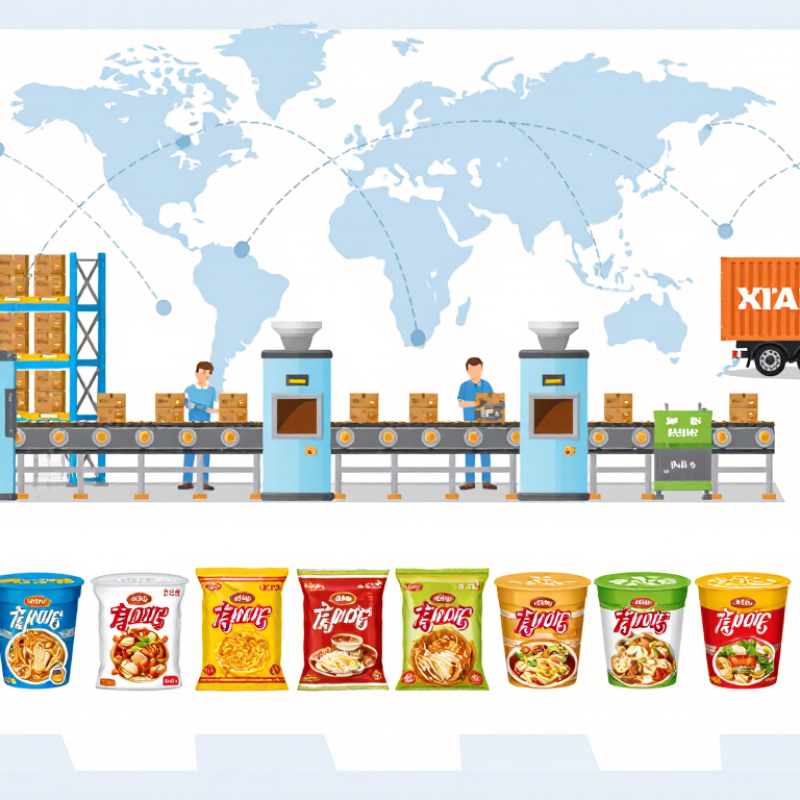
10 Best Instant Noodles Suppliers for Global Buyers

How Instant Noodle Suppliers Serve Global Buyers

Serving global buyers means more than shipping cartons of noodles. Suppliers coordinate recipes, pack sizes, production schedules, and export documents. The World Instant Noodles Association reported global demand of 120.2 billion servings in 2023. That figure signals a vast market, but it does not guarantee demand for every format. Buyers still need to match local tastes, price points, and cooking habits. A spicy cup may sell well in one market and sit untouched in another.

Reliable suppliers share practical details early: minimum order quantities, lead times, carton dimensions, shelf life, and ingredient specifications. Clear nutrition and allergen information also helps buyers assess products and prepare market-specific packaging. For a first order, sample cartons and a small trial run can reveal whether noodles stay firm after preparation and packaging withstands humid storage. Details matter. Forecasts can still be wrong; I have seen careful plans miss a seasonal shift. The useful response is flexibility: confirm production dates, agree on quality checks, and keep communication open when shipping schedules change.

Instant Noodle Demand in Major Markets (2023)

Annual demand in billion servings highlights the scale of key markets served by global suppliers.

Source: World Instant Noodles Association (WINA), 2023 demand estimates. Demand indicates market size, not supplier sales.

Key Factors for Evaluating International Suppliers

Global instant noodle demand reached 120.21 billion servings in 2023, according to the World Instant Noodles Association’s demand table. Volume can mislead. Ask suppliers for monthly output, peak-season allocation, and recent on-time shipment records. Request samples from several production batches. Compare noodle texture, seasoning weight, seal strength, and cooking time. Small differences can become visible across thousands of cartons.

Review food-safety controls and documents before negotiating price. Check current audit certificates, product specifications, allergen controls, traceability exercises, and corrective-action records. The certificate’s scope should cover the actual factory. Details matter. UNCTAD’s Review of Maritime Transport 2024 reports that seaborne trade grew 2.4% in 2023; buyers should still test route reliability and lead-time buffers. Ask suppliers to verify packaging performance under humid storage and confirm remaining shelf life at arrival. I would not treat a polished audit file as proof of daily discipline. An independent factory audit, when practical, can reveal gaps paperwork misses. Also assess communication: delayed answers about batch codes or carton dimensions may signal friction later.

10 Best Instant Noodles Suppliers for Global Buyers - Key Factors for Evaluating International Suppliers

How to use this table: These are supplier profiles to consider, not named companies or verified rankings. Capabilities, certifications, lead times, and prices vary by facility and order; confirm them directly with each prospective supplier.

Supplier profile Potential fit Key capability to evaluate Evidence to request Cost and logistics checks Main risk to manage
1. Large-scale noodle manufacturer Buyers needing recurring, high-volume orders. Available production capacity, line flexibility, and ability to meet agreed specifications at scale. Facility audit information, product specifications, recent production records, and a production-capacity plan for the proposed order. Compare minimum order quantity, production lead time, packaging options, and freight-ready carton dimensions. Large minimum orders or limited flexibility for small test batches.
2. Private-label and OEM specialist Retailers, distributors, and food-service buyers seeking their own label. Custom seasoning, packaging artwork coordination, recipe control, and ownership terms for buyer-developed specifications. Written product brief, packaging proof, ingredient declaration, sample approval process, and a clear agreement on artwork and formula use. Check artwork, plate, tooling, and changeover charges separately from the unit price. Unclear ownership or approval procedures for custom packaging and formulations.
3. Export-focused manufacturer Importers selling into markets with specific labeling and documentation rules. Experience preparing export documents and adapting labels to the destination market. Sample export-document set, destination-market label draft, ingredient and allergen data, and product shelf-life information. Confirm the agreed Incoterm, export-port options, shipment frequency, and who handles destination-specific compliance work. Assuming that documentation accepted in one market will satisfy another market's rules.
4. Halal-certified production facility Buyers whose target market or customers require halal-compliant products. Whether the specific noodle product and production site fall within the scope of a current halal certificate. Certificate issuer, certificate validity dates, covered site and product scope, and ingredient documentation for seasonings and processing aids. Verify certificate acceptance with the relevant importer or market authority before placing an order. A certificate may not cover every product, ingredient, or production location.
5. Manufacturer with documented food-safety systems Buyers prioritizing supplier approval, traceability, and audit readiness. Hazard controls, sanitation procedures, lot identification, complaint handling, and recall readiness. Current food-safety certificates where applicable, audit summaries, traceability procedure, and recall or incident-response process. Clarify audit access, corrective-action timelines, and responsibility for third-party inspection costs. Certificates and audits must be checked for current validity, scope, and site coverage.
6. Gluten-free or specialty-diet producer Buyers developing products for customers with defined dietary requirements. Ingredient controls, segregation practices, and testing appropriate to the specific product claim. Full ingredient list, allergen-control plan, relevant test reports, and evidence supporting any proposed label claim. Review formulation costs, dedicated-line availability, and whether testing is included in the quoted price. Do not rely on a product description alone to substantiate a dietary or allergen claim.
7. Air-dried or reduced-frying product specialist Buyers seeking alternatives to conventional fried noodle cakes. Cooking performance, texture consistency, packaging protection, and substantiation for nutrition or process claims. Product specification, preparation instructions, nutrition data, shelf-life support, and samples from representative production batches. Compare product cost and shipping weight per serving with other formats, not only price per carton. Texture and preparation time may differ from buyer expectations; test with target consumers.
8. Cup and bowl noodle packer Convenience retail, travel, workplace, and food-service channels. Container durability, lid and seal performance, utensil inclusion, and pack dimensions suitable for the sales channel. Packaging specification, seal-integrity checks, transit-test results where available, and a packed sample. Check container volume, outer-carton cube, pallet pattern, and shipping efficiency. Bulky packaging can reduce units per shipment and affect landed cost.
9. Manufacturer offering regional flavor development Buyers tailoring seasoning profiles to local preferences. Ability to develop and reproduce a defined flavor profile while controlling ingredient substitutions. Seasoning specification, ingredient and allergen declarations, sample approval record, and written change-control procedure. Confirm sample-development charges, formula minimums, and lead time for seasoning ingredients. Ingredient availability or substitutions can change flavor, labeling, or regulatory status.
10. Flexible small-batch or pilot-order producer New-market testing, product trials, and buyers validating demand before scaling. Minimum order quantity, pilot capacity, and a clear pathway from trial production to repeat commercial orders. Written pilot specification, sample and batch approval process, and a quote showing trial and scale-up pricing separately. Compare per-unit costs at pilot and commercial volumes, including packaging and setup fees. Trial pricing and availability may not reflect the economics or capacity of full-scale production.

10 Leading Instant Noodle Suppliers for Global Buyers

Global buyers assessing leading instant noodle suppliers should look beyond catalog size. The World Instant Noodles Association reported 120.21 billion servings of global demand in 2023. This scale makes consistency important, but demand alone says little about a supplier’s reliability. Request recent audit records, batch specifications, and references for comparable export orders.

For a shortlist of ten suppliers, compare noodle texture after cooking, seasoning consistency, and packaging seal strength. Test samples from at least two production lots; one sample can conceal variation. Ask for ingredient and allergen documentation, shelf-life test results, and traceable lot codes. Short lead times matter. So does a realistic container-loading plan and backup capacity during peak seasons. A polished presentation is not proof.

Compare landed cost, not just the factory quote. Include freight, packaging, minimum order quantities, and possible delays at key ports. Check whether cartons withstand stacking and damp handling, especially on long routes. Supplier scorecards help, though they can miss practical issues: a sample may taste right while the next batch differs slightly. Buyers should record cooking results, delivery performance, and quality claims over several orders.

Product Range, Certifications, and Export Capabilities

Global buyers comparing instant noodle suppliers should examine product range, certifications, and export readiness together. A broad catalog may include wheat, rice, or air-dried noodles, plus different soup bases and spice levels. Ask whether recipes, pack sizes, and carton labels can be adjusted for your market. Request samples from the same production line you plan to order from. Small details matter.

Check that each certificate is current and covers the actual manufacturing site and product category. Food-safety systems such as ISO 22000 or HACCP can support due diligence, but a certificate alone does not guarantee consistent quality. Ask for audit scope, ingredient specifications, allergen controls, and recent test documents. For export capability, confirm shelf-life data, packaging strength, loading plans, lead times, and experience preparing shipment documents. A polished catalog can still hide slow sample approval, so test communication before committing to a large order.

Tips: Request a sample carton, not just a single packet. Check seals, noodle texture, and printed date codes after transit. Compare written production and delivery timelines; vague answers deserve follow-up.

How to Match a Supplier to Your Market Needs

Matching an instant noodle supplier to a market takes more than comparing unit prices. The World Instant Noodles Association recorded 120.2 billion servings of global demand in 2023. China and Hong Kong accounted for 42.2 billion, while Indonesia reached 14.5 billion. Those figures show why a single flavor, pack size, or spice level rarely fits every destination.

Taste travels poorly. Ask suppliers for samples in the formats buyers actually sell: single-serve cups, multipacks, or larger family packs. Check seasoning intensity, noodle texture after preparation, and whether the package withstands humid storage. A product suited to a convenience store may not suit a value-focused supermarket. Request ingredient specifications, allergen information, shelf-life evidence, and production records before placing a large order.

Capacity matters, but so does consistency. Compare minimum order quantities, lead times, export packaging, and their ability to handle repeat orders. The World Bank’s 2023 Logistics Performance Index is a useful reference when assessing routes and delivery conditions, though it cannot predict every shipment delay. Ask for a realistic production schedule and a clear process for handling quality complaints. A polished sample is not proof of reliable scale. That distinction is easy to miss.