Why Choose Steamed Bao Buns for Global Wholesale?
Global foodservice is moving toward convenient, portion-controlled products with recognizable Asian flavors. Steamed Bao Buns fit this shift with soft dough, savory fillings, and quick service preparation. They can move from frozen storage to a steamer, then reach customers within minutes.
Market evidence supports this opportunity. Fortune Business Insights reported that the global frozen food market was valued at approximately USD 291.70 billion in 2023. The report also projects continued growth through 2032, driven by convenience, urban lifestyles, and improved cold-chain distribution. These conditions matter for wholesale buyers managing restaurants, cafés, supermarkets, and institutional kitchens.
Steamed Bao Buns also offer operational flexibility. A consistent 70–100 gram portion can simplify inventory planning and menu pricing. A carton may include pork, chicken, vegetable, or plant-based options. This variety helps distributors serve different markets without redesigning the entire product line. Still, consistency is not guaranteed.
Texture can change when storage temperatures fluctuate. Filling ratios may also affect steaming time and customer satisfaction. Wholesale buyers should therefore verify cooking instructions, packaging strength, allergen declarations, and shelf-life data before placing large orders. The International Food Information Council continues to identify convenience and food transparency as important consumer considerations, although preferences differ across regions.
Product adaptation remains essential. Some markets prefer sweeter sauces, smaller portions, or vegetarian fillings. Others value traditional recipes and visible handmade details. A reliable supplier should provide batch specifications, traceability records, export documentation, and practical preparation guidance.
The opportunity is real. The risks deserve equal attention. Steamed Bao Buns can support scalable foodservice growth when taste, logistics, compliance, and local demand are evaluated together.
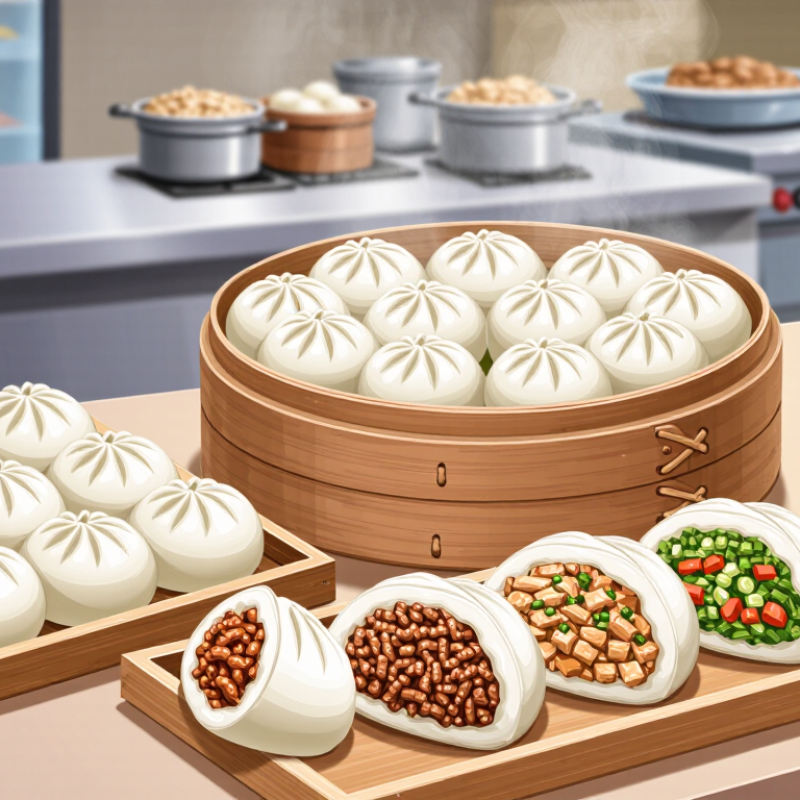
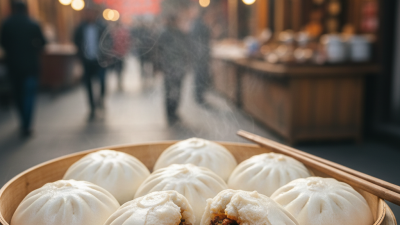
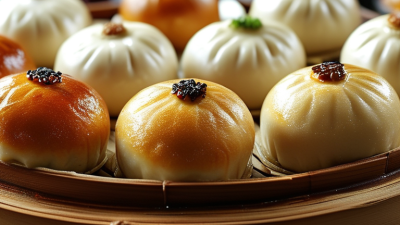
Steamed bao buns are soft, yeast-leavened breads cooked with moist heat. Their pale surface, tender crumb, and gentle chew make them suitable for many wholesale food programs. Unlike baked bread, bao buns develop no browned crust. They remain smooth and flexible.
Production begins with flour, water, yeast, and carefully measured sugar. Some recipes also use oil or a small amount of salt. The dough is mixed until elastic, then rested until fermentation creates lightness. It is divided into equal pieces and shaped around seasoned fillings, such as vegetables, poultry, or other permitted ingredients. Plain bao buns are also widely used.
Details matter. A filling that is too wet can weaken the dough and cause leakage. Poor sealing may open during steaming. The shaped buns need another short proof before entering a steamer. Inside the chamber, hot vapor cooks the dough evenly and preserves its soft texture. After cooling, wholesale suppliers should check weight, shape, seal quality, filling distribution, and internal temperature. Cold-chain handling and clear labeling also support reliable distribution.
Consistency is difficult. Even skilled teams see differences between batches. Humidity, flour absorption, and steaming time can change the final texture. That is worth reviewing, not hiding. Careful records and small process adjustments help buyers receive bao buns that perform predictably during storage, transport, and preparation.

Steamed bao buns suit global wholesale distribution because they offer consistent portions, flexible fillings, and efficient handling. Their soft, round shape protects the filling during packing and transport. Standard sizes also simplify inventory planning for restaurants, caterers, and food-service distributors. Each bun can be counted, packed, and prepared with fewer variations.
That matters.
A stable steaming process helps maintain a tender texture across production batches. Properly sealed packaging can reduce moisture loss and protect the buns from freezer odors. Distributors should check storage temperatures, shelf-life data, allergen information, and reheating instructions before placing large orders. These details support safer operations and clearer communication with buyers in different regions.
Bao buns also adapt well to local menus. A distributor may offer vegetable, poultry, seafood, or other permitted fillings, depending on market preferences and regulations. However, global distribution is not automatically simple. Not every market behaves alike.
Humidity, transport time, warehouse equipment, and consumer habits can affect product performance. Export planning should include validated freezing or chilling procedures, durable cartons, and documented quality checks. From practical wholesale experience, a small packaging weakness can become a costly complaint after a long shipment. Continuous testing is still necessary, especially when changing filling formulas, delivery routes, or preparation equipment.
Why Choose Steamed Bao Buns for Global Wholesale?
Steamed bao buns suit foodservice buyers seeking speed, consistency, and flexible menu options. A pre-portioned bun can reduce preparation steps during busy service periods. It also supports predictable purchasing and easier staff training. USDA Economic Research Service data shows that food-away-from-home spending represented about 58% of total U.S. food spending in 2023. This shift increases demand for convenient, repeatable foodservice formats. Bao buns can work as breakfast items, snack products, or filled meal components. Small portions matter.
For retail markets, frozen steamed bao buns offer practical inventory control. They can move through established cold-chain systems and require less daily preparation. The Food and Agriculture Organization reports that 13.2% of food is lost globally before retail. Better portioning and demand-based cooking may help reduce avoidable waste, although results depend on storage and handling. Retail buyers should check packaging strength, cooking instructions, freezer stability, and filling consistency. A low unit cost means little if breakage is high.
Tips: Test the product in real kitchens, not only in samples. Measure steaming time, yield, texture after holding, and labor minutes. Review supplier documentation for allergen control, batch traceability, and temperature requirements. The case is strong, but not automatic. Poor steaming equipment can create dry edges or collapsed dough. That caveat deserves attention before a large wholesale order.
| Buyer Dimension | Commercial Data or Benchmark | Wholesale Benefit | Buyer Considerations |
|---|---|---|---|
| Product Format | Most wholesale bao buns are supplied frozen or chilled; frozen distribution is commonly used for longer-distance trade. | Supports inventory planning and enables distribution across multiple foodservice and retail locations. | Confirm whether the product is supplied fully cooked, par-cooked, or raw, and follow the supplier’s storage instructions. |
| Frozen Storage | A widely used international benchmark for frozen food storage and transport is −18°C or colder. | Allows centralized purchasing, longer replenishment cycles, and reduced dependence on daily production. | Temperature records, freezer capacity, and uninterrupted cold-chain handling should be reviewed before import. |
| Chilled Storage | For foods requiring time and temperature control, 5°C or below is a commonly used food-safety reference point. | Suitable for short distribution cycles, commissaries, cafés, and fresh-food retail counters. | Chilled shelf life is product-specific and must be supported by validated shelf-life testing and local regulations. |
| Cooking Equipment | Steamer baskets, pressure steamers, and combi ovens with a steam function can be used, depending on the product specification. | Offers operational flexibility for restaurants, catering kitchens, convenience stores, and hotel breakfast service. | Validate cooking time, equipment loading, and texture results using the actual pack size and recipe. |
| Reheating Safety | Where applicable to the product and local food code, a core temperature of at least 74°C is commonly used as a reheating safety benchmark. | Provides a measurable food-safety control for high-volume service. | Use a calibrated thermometer and follow the product label, HACCP plan, and local regulations. |
| Portion Control | Commercial bao buns are commonly offered in multiple piece sizes, often approximately 40–120 g per piece; this is an indicative range rather than a universal standard. | Makes menu costing, set-meal planning, and consistent serving sizes easier. | Request exact piece weight, filling ratio, tolerance, and pieces per case before quotation. |
| Labor Efficiency | Pre-portioned frozen or chilled units can be reheated to order without on-site dough mixing, proofing, shaping, or filling. | Reduces preparation complexity and supports standardized output across shifts and locations. | Actual labor savings depend on equipment, staffing levels, menu volume, and preparation instructions. |
| Menu Versatility | Bao buns can be served as breakfast items, snacks, appetizers, side dishes, lunch components, or filled main-course items. | Allows buyers to serve multiple dayparts and adapt fillings or sauces to local preferences. | Check whether the recipe is suitable for vegetarian, vegan, halal, kosher, or other target-market requirements. |
| Allergen Management | Wheat or gluten is commonly present in the bun; fillings and sauces may also contain soy, sesame, milk, egg, fish, crustaceans, or other regulated allergens. | Clear allergen documentation helps buyers manage menus, labels, and foodservice communication. | Obtain a complete ingredient list, allergen statement, cross-contact controls, and country-specific declarations. |
| Packaging and Handling | Individual or separated pack formats can help prevent sticking, deformation, freezer burn, and unnecessary handling. | Improves portion picking and can support foodservice kitchens with different order volumes. | Review case dimensions, net weight, pallet configuration, packaging material, and recycling requirements. |
| Retail Suitability | Retail-ready packs can be positioned in frozen food, Asian specialty, convenience, and prepared-food categories. | Creates opportunities for both take-home preparation and ready-to-eat foodservice programs. | Packaging should include cooking instructions, storage conditions, net quantity, date marking, and legally required nutrition information. |
| Quality Consistency | Factory-controlled mixing, proofing, filling, steaming, and freezing can provide more uniformity than small-batch manual production. | Supports consistent appearance, texture, portion weight, and customer experience across locations. | Request specifications for weight tolerance, bun diameter, filling weight, defect rate, and quality inspections. |
| Import Readiness | International shipments may require approved facilities, health documents, certificates, labeling compliance, and validated cold-chain procedures. | Early documentation review reduces customs, regulatory, and delivery risks. | Requirements differ by destination and by filling type, especially for products containing meat, seafood, dairy, or egg. |
Note: Commercial ranges are indicative benchmarks only. Final specifications, shelf life, storage conditions, cooking instructions, labeling, and import requirements must be confirmed with the supplier and the relevant destination-market authorities.
Why Choose Steamed Bao Buns for Global Wholesale?
How to Evaluate Quality, Packaging, and Supplier Standards
When buying steamed bao buns internationally, quality begins before the first bite. Ask for a written product specification, including flour type, filling ratio, size, weight, and cooking method. A reliable sample should have a soft, elastic texture and an even white surface. The filling must smell fresh, not overly salty or oily. Check several pieces, because one excellent sample proves little.
Packaging protects quality during long transport. Confirm that the inner bag is food-grade, sealed tightly, and resistant to freezing. Outer cartons should prevent crushing during pallet stacking. Each case needs clear lot codes, production dates, storage temperatures, allergen information, and shelf-life details. Test the carton after handling. Small tears can become expensive problems.
Supplier standards require more than attractive paperwork. Request current food-safety certificates, traceability records, laboratory results, and documented cold-chain procedures. Ask the supplier to explain how they manage temperature deviations. A practical test is a mock recall using one lot number. The response should be quick and complete. I have seen attractive samples hide weak carton seals. No evaluation is perfect. Recheck delivery consistency, because the second shipment may reveal more than the first. A factory visit or independent audit can confirm hygiene controls, staff training, and production capacity. Do not accept certificates as proof alone.
Wholesale Supplier Evaluation Scorecard
This suggested scorecard prioritizes food safety, consistent product quality, packaging protection, cold-chain capability, and supplier reliability. Buyers can use these weightings to compare suppliers without relying on brand identity. Key checks should include documented food-safety controls, allergen labeling, lot traceability, intact packaging, frozen storage at or below −18°C, and dependable export documentation.
Importing steamed bao buns internationally requires more than comparing unit prices. Their soft texture and familiar filled format can suit foodservice, retail, and quick-service kitchens. However, buyers must confirm whether the product arrives frozen, chilled, or shelf-stable. Each option changes storage, transport, and customs requirements.
Check the destination country’s import permits, labeling rules, allergen declarations, and approved facility requirements. Labels may need ingredients, net weight, production dates, storage instructions, and country of origin. Requirements differ between markets. Do not rely on a supplier’s general statement. Ask for current certificates, product specifications, and laboratory or shelf-life data.
Cold-chain planning is critical. Frozen shipments commonly require stable temperatures near -18°C, but local rules may vary. Use temperature loggers inside the shipment, not only on the vehicle. Confirm carton strength, pallet dimensions, and unloading procedures before booking a container. A delayed port inspection can damage quality quickly.
Request samples from the same production line used for wholesale orders. Evaluate wrapper elasticity, filling distribution, steaming time, and texture after reheating. Review the supplier’s food-safety controls, batch records, traceability system, and corrective-action process. A successful sample is not proof of stable production. I have seen buyers overlook this gap. A smaller test shipment may cost more initially, yet it can reveal thawing, labeling, or handling problems before a full container arrives.