
Leave Your Message
- Phone
- E-mail
- Whatsapp
- Wechat
-
-

-
-
Sourcing Gluten Free Steamed Buns in 2026 requires more than finding a supplier with a convincing product photo. Buyers must verify ingredients, allergen controls, texture, packaging, and delivery performance. A soft bun can look perfect in a sample box, then crack after freezing or become sticky after steaming.
The global gluten-free products market continues to attract investment. Grand View Research estimated its value at approximately USD 6.45 billion in 2023, with strong growth expected through 2030. Its findings indicate rising demand for gluten-free bakery products, especially among consumers seeking clearer ingredient information. Fortune Business Insights also identifies bakery as a major application area in the gluten-free market. These reports provide useful direction, but they do not replace supplier-level testing.
For Gluten Free Steamed Buns, sourcing teams should request a current ingredient specification, allergen statement, production-flow diagram, and test report for gluten content. The Codex Alimentarius standard generally uses 20 mg/kg as the gluten limit for foods labeled gluten-free. In the United States, the FDA applies the same threshold. However, certification claims can differ by market. Confirm the applicable requirement before approving packaging.
Ask for pilot samples, not promises. Steam one bun fresh, freeze another, and inspect both after reheating. Check elasticity, filling distribution, package seals, and odor. A supplier may provide excellent samples but inconsistent batches. That risk deserves attention. Reliable sourcing depends on traceability, documented corrective actions, and transparent communication, not only a low quotation.
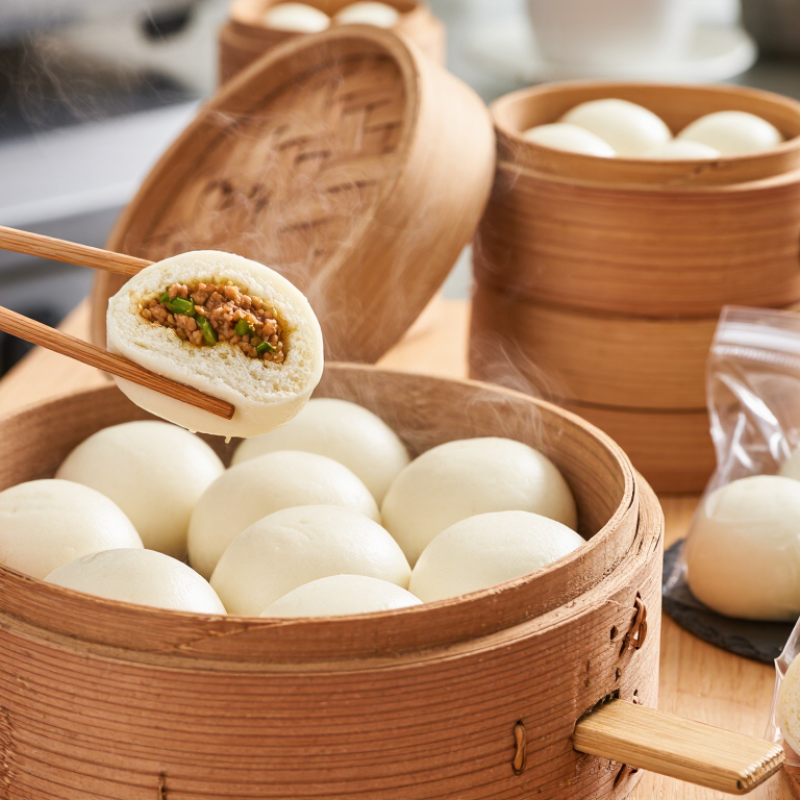
How to Source Gluten-Free Steamed Buns in 2026?
For gluten-free steamed buns, the key purchasing rule is measurable compliance. The FDA defines “gluten-free” as containing less than 20 parts per million (ppm) of gluten. This applies to finished food, ingredients, and unavoidable cross-contact. The Codex Alimentarius Standard for Foods for Special Dietary Use also uses a below-20 ppm threshold for foods labeled gluten-free. Therefore, a supplier’s promise is not enough. Request recent laboratory results, test methods, batch numbers, and ingredient specifications.
Look for testing completed by an accredited laboratory, preferably using a validated ELISA method, such as AOAC-approved gluten analysis. The report should identify wheat, rye, barley, and contamination risks. Production records matter too. Shared mixers, flour dust, bamboo steamers, and storage bins can undermine an otherwise suitable recipe. The Gluten Intolerance Group’s 2024 consumer research notes that trust and verified safety strongly influence gluten-free purchasing decisions. Still, survey data reflects consumer behavior, not legal compliance.
Tips: Ask for a certificate of analysis for every production lot. Confirm whether testing covers the finished bun, not only raw starch. Request a written allergen-control plan. Check the facility’s cleaning validation and complaint records. Do not accept “wheat-free” as equivalent to “gluten-free.” That distinction is often missed. Sampling can also be imperfect, so one clean result should not end supplier monitoring.
| Sourcing Dimension | FDA Reference for the U.S. Market | Codex Reference | Practical Requirement for Steamed Buns | Evidence to Request Before Purchase |
|---|---|---|---|---|
| Gluten-free threshold | The finished food must contain less than 20 parts per million (ppm) of gluten, equivalent to less than 20 mg/kg. | Codex defines “gluten-free” as no more than 20 mg/kg of gluten in foods as sold to the final consumer. | Set the purchasing specification at <20 ppm, with a documented internal action limit below the legal maximum to provide a control margin. | Current product specification, regulatory statement, and recent finished-product test results. |
| Gluten-containing grains | Wheat, rye, barley, and their crossbred varieties must be excluded or controlled so the finished food remains below the FDA threshold. | Codex gluten controls focus on wheat, rye, barley, oats, and their crossbred varieties, unless rendered safe under the applicable standard. | Do not accept wheat flour, wheat starch, standard seitan-derived ingredients, rye, barley malt, or unverified cereal powders. | Full ingredient list, raw-material specifications, allergen declarations, and supplier change-notification procedure. |
| Oat ingredients | Oats are not automatically prohibited under the FDA gluten-free rule, but the finished food must still meet the less-than-20-ppm requirement and avoid cross-contact. | Codex recognizes that oats may be tolerated by most people with celiac disease, but oat contamination with wheat, rye, or barley must be controlled. | Use oats only when they are specifically qualified for gluten control and supported by traceability and testing records. | Oat-origin statement, dedicated or validated handling controls, lot traceability, and analytical results. |
| Starch and flour functionality | Ingredients must be accurately identified and the finished product must comply with the gluten-free definition; FDA does not pre-approve individual gluten-free products. | The product must meet the applicable gluten-free limit and labeling requirements in the destination market. | Qualify rice, tapioca, potato, corn, or other gluten-free starch systems for dough elasticity, steaming stability, and texture without introducing undeclared cereal derivatives. | Technical data sheets, composition percentages, allergen status, certificate of analysis, and approved-substitute list. |
| Cross-contact prevention | Manufacturers must prevent cross-contact with gluten through appropriate controls, including ingredient handling, equipment, cleaning, and production scheduling. | Good manufacturing practices and preventive controls are expected to keep the product within the gluten-free limit. | Prefer a dedicated gluten-free line or a validated segregation and sanitation program with controlled personnel and material flows. | Facility flow diagram, sanitation standard operating procedures, cleaning validation, environmental monitoring, and corrective-action records. |
| Finished-product testing | Testing should use a scientifically valid method capable of detecting gluten at levels relevant to the less-than-20-ppm requirement. | Analytical verification should use an appropriate validated method and representative sampling of the product. | Test representative finished lots, especially after recipe, supplier, equipment, or process changes. Do not rely only on raw-material tests. | Laboratory report showing method, limit of quantification, sample identification, lot number, result, and laboratory accreditation status. |
| Sampling plan | No single universal sampling frequency is prescribed for every gluten-free food; the manufacturer must apply appropriate preventive controls. | Sampling should be risk-based and representative of production and potential contamination points. | Use a documented risk-based plan covering start-up, routine production, high-risk ingredients, changeovers, and deviations. | Sampling protocol, risk assessment, test frequency, acceptance criteria, and retained-sample procedure. |
| Label and claim review | A “gluten-free” claim must be truthful and not misleading, and the food must satisfy the FDA gluten-free rule. The term is voluntary. | Labeling must comply with the destination country’s adopted Codex-based or national requirements. | Review the exact label, ingredient declaration, allergen statement, preparation instructions, and any “may contain” wording before approval. | Artwork proof, regulatory review record, ingredient declaration, allergen assessment, and claim substantiation file. |
| Supplier qualification | The buyer should verify that the supplier’s preventive controls and records support compliance; FDA does not issue a general product certificate for gluten-free foods. | Supplier controls should support traceability, hygienic production, and compliance with the applicable gluten-free limit. | Approve suppliers using a questionnaire, document review, risk ranking, and—when justified—a remote or on-site audit. | Food-safety plan, audit report, certifications if applicable, traceability test, recall procedure, and change-control agreement. |
| Lot release and deviation handling | Nonconforming product must be prevented from entering commerce or must be appropriately controlled under the manufacturer’s food-safety system. | Corrective actions should address the source of contamination and verify that control has been restored. | Require lot identification, release authorization, quarantine capability, root-cause analysis, and documented re-test or disposal decisions. | Lot-release form, deviation log, corrective-action report, recall simulation results, and retained production records. |
| Frozen storage and transport | Temperature control does not replace gluten controls, but handling must preserve product safety, packaging integrity, and traceability. | Good hygienic and distribution practices should prevent contamination and maintain product quality through delivery. | Use sealed packaging, pallet segregation where needed, documented temperature monitoring, and protection from loose flour or mixed cargo. | Transport specification, temperature records, packaging specification, seal-control procedure, and delivery-condition checklist. |
| Recommended purchase decision | Accept only when the product is supported by documented controls and complies with the FDA less-than-20-ppm definition for the U.S. market. | Accept only when the product meets the applicable Codex-aligned requirement of no more than 20 mg/kg, subject to local law. | Approve the source when ingredient, process, testing, labeling, traceability, and logistics records are complete and consistent. | Completed supplier approval checklist with no unresolved critical findings. |