Leave Your Message
- Phone
- E-mail
- Whatsapp
- Wechat

-

-

-

-

Potato Pancakes may look simple: grated potato, a hot surface, crisp edges. Yet reliable production depends on more than a good recipe. Buyers also assess potato sourcing, starch consistency, freezing capacity, food safety systems, packaging, and delivery reliability. These details matter when comparing manufacturers in China, where regional supply chains and factory capabilities can differ sharply.
FAOSTAT’s 2022 data records about 375 million tonnes of potatoes produced worldwide, with China contributing roughly 96 million tonnes. These figures describe the raw-material base, not the size of the potato-pancake market. That distinction is important. A large potato crop does not automatically mean a factory can make consistent, export-ready pancakes. Research by the OECD and FAO on agricultural markets also provides useful context on production and supply-chain pressures, but it does not rank pancake manufacturers.
Potato researcher Andre Devaux, associated with the International Potato Center, has emphasized potatoes’ importance to food security and sustainable value chains. I could not verify a direct, topic-specific quotation from him about Potato Pancakes, so I will not invent one. That is a limitation worth stating.
This guide compares ten Chinese manufacturers through practical indicators: product range, processing capability, quality documentation, and buyer support. Treat any ranking as a starting point, not a final verdict. Factory claims need checking. A crisp sample can still hide inconsistent batches.
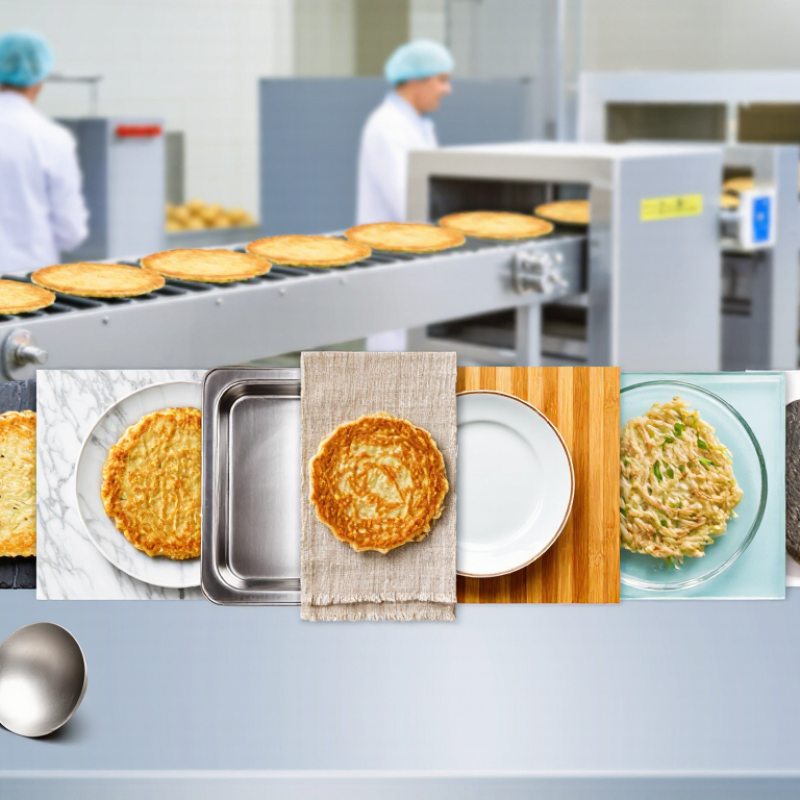
Understanding Potato Pancakes and Their Place in China’s Food Industry
Potato pancakes connect a familiar crop with convenient, adaptable meals. FAOSTAT’s 2022 production data records China’s potato harvest at about 93.5 million tonnes. This figure covers potatoes for many uses; it does not measure pancake sales. Still, it shows the scale of the agricultural supply behind potato-based foods. In kitchens and factories, shredded or mashed potatoes can become crisp-edged pancakes, with texture shaped by moisture, starch, and cooking temperature. Small differences matter.
For manufacturers, consistency starts before frying. Potato variety, cut size, seasoning, and freezing conditions can all affect the finished bite. Regional preferences also influence thickness and flavor. A thin pancake may crisp quickly, while a thicker one stays softer inside. There is no single standard. The category’s opportunity is real, but reliable public data on China’s potato-pancake market remains limited, so production estimates should not be mistaken for consumer demand.
Tips: Test batches with measured potato moisture and cooking time. Record the results. A little unevenness can reveal where the process needs work.
Industry overview: This table describes ten relevant manufacturing and product dimensions, not a ranked list of companies. Potato pancakes are made in different styles, and recipes and production methods vary by product and region.
| No. | Manufacturing Dimension | Common Product or Process | Relevant Industry Fact | What Buyers Can Check |
|---|---|---|---|---|
| 1 | Potato raw material | Fresh potatoes, potato mash, or processed potato ingredients | Potatoes can be used in whole, shredded, mashed, or processed forms; the choice affects the pancake’s texture and production steps. | Ask about ingredient specifications, incoming-material inspection, and how the potato form is identified on the product label. |
| 2 | Product style | Shredded-potato cakes, mashed-potato patties, and formed potato-based pancakes | “Potato pancake” is a broad product description rather than one standardized recipe. Products can differ in shape, thickness, seasoning, and texture. | Compare the actual ingredient list, product appearance, and cooking instructions rather than relying on the product name alone. |
| 3 | Binding ingredients | Starch or flour; some recipes may also use egg or other ingredients | Binding ingredients help hold a formed product together, but the formulation varies. A product’s allergen profile depends on its ingredients and manufacturing controls. | Review the ingredient and allergen information, and confirm requirements for products intended for particular consumers or markets. |
| 4 | Preparation and mixing | Washing, peeling where applicable, cutting or mashing, and mixing | Preparation methods depend on whether the product uses fresh potato pieces, mash, or another potato ingredient. | Check process descriptions, batch consistency controls, and procedures for preventing foreign-material contamination. |
| 5 | Forming and portioning | Manual or mechanical shaping into patties or other portions | Forming equipment can help produce consistent product shapes and portion sizes in larger-scale production. | Request product dimensions, portion-weight tolerances, and samples from the intended production process. |
| 6 | Cooking method | Pan-frying, griddle cooking, or frying as part of a prepared-product process | Cooking method influences surface browning, texture, oil content, and the preparation required by the end user. | Confirm whether the product is raw, partially cooked, or fully cooked, and follow the manufacturer’s preparation instructions. |
| 7 | Chilled or frozen format | Products supplied chilled or frozen, depending on the product and distribution plan | Temperature-controlled storage and transport are important for chilled and frozen foods; handling requirements should be stated for each product. | Check storage temperature, shelf-life conditions, delivery arrangements, and instructions for thawing or cooking. |
| 8 | Packaging and food information | Retail packs, food-service packs, or other formats suited to the sales channel | Prepackaged foods in China are subject to food-labeling requirements. Product information should accurately reflect the food and its handling needs. | Review the Chinese-language label, ingredient list, net content, date information, storage instructions, and applicable compliance documentation. |
| 9 | Food-safety controls | Hygiene management, process controls, traceability, and finished-product checks | Food producers operating in China must comply with applicable food-safety laws and requirements for their products and operations. | Verify the producer’s required qualifications, traceability arrangements, quality-control records, and relevant audit or testing documentation. |
| 10 | Sales-channel fit | Retail, catering, institutional food service, or prepared-food supply | Pack size, cooking convenience, storage format, and delivery needs differ between household retail and food-service use. | Confirm minimum order quantities, packaging options, delivery coverage, lead times, and whether the product suits the intended kitchen equipment. |