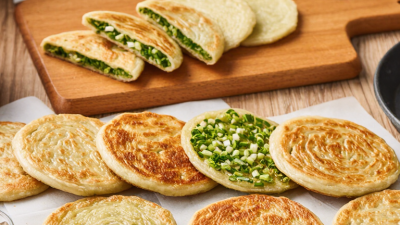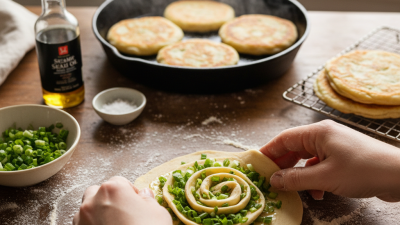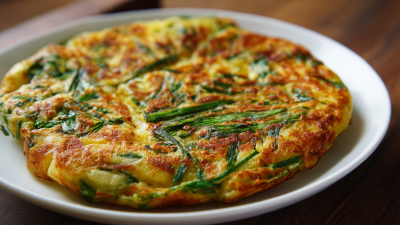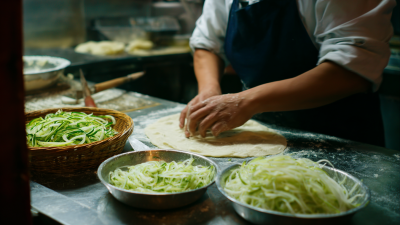
Finding a reliable Green Onion Pie supplier in 2026 takes more than comparing quoted prices. Buyers need to check product consistency, ingredient specifications, production capacity, packaging, and delivery performance. Small differences matter: a filling that tastes sharper, pastry that cracks after freezing, or cartons that arrive damp can affect customer reviews and kitchen waste. Details matter.
FMI’s 2024 Power of Frozen report estimated U.S. frozen-food retail sales at $74.2 billion in 2023. This figure describes the broader frozen-food category, not green onion pies specifically. It does, however, show why frozen products deserve serious attention in supplier planning. The USDA Economic Research Service’s Food Expenditure Series offers additional context on spending across food retail and food-service channels. Together, these sources can guide research, but they cannot verify a supplier’s actual performance.
A practical search should compare manufacturers, wholesalers, and food-service distributors against the same checklist. Request current product specifications, ingredient and allergen information, sample packs, case dimensions, minimum order quantities, and written lead times. Ask how the supplier manages temperature control and handles quality complaints. Then test samples in the conditions your customers will experience: reheated, plated, and held for a realistic service period. Paperwork helps. Real samples help more. This guide explains how to find and assess potential suppliers, verify their claims, and negotiate terms that fit your operation. No checklist removes every risk; some supplier details only become clear after a trial order.
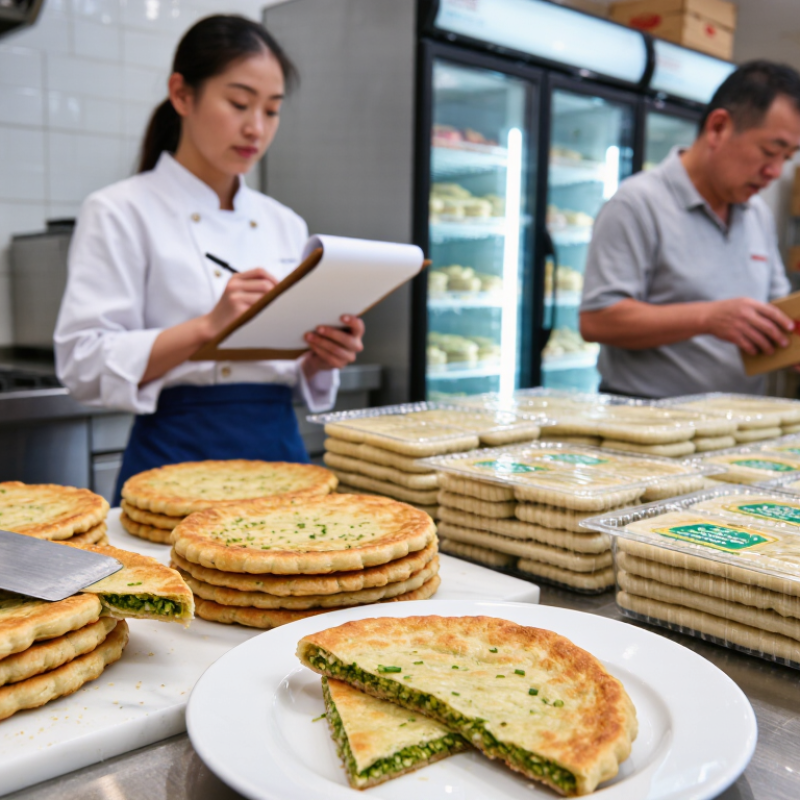
Before contacting suppliers, turn “green onion pie” into a measurable product brief. Set the finished diameter, target weight, thickness, filling ratio, and acceptable variation per piece. Specify whether the pastry should be flaky, chewy, or crisp after reheating. Be precise. State the cooking method buyers will use, such as pan-frying from frozen or oven heating after thawing. These details affect dough performance and packaging needs. Describe the scallion profile too: mild or sharp, visible green pieces, and a minimum filling percentage if consistency matters. A photograph helps, but it cannot replace written tolerances. A frequent sourcing gap appears when teams approve a sample, then find the scaled-up pies heavier or oilier. Samples need numbers.
Next, match these specifications to practical purchasing conditions. Estimate monthly volume, peak-season demand, order frequency, delivery regions, and required storage temperature. Decide whether each pie will be individually wrapped, bulk-packed, or labeled for food-service handling. Ask suppliers for ingredient and allergen declarations, shelf-life data, batch coding, and written storage instructions. Verify that the documents match the actual product. Request samples from more than one production lot when possible. One sample is useful, not proof. Confirm production capacity and lead times in writing, then agree how defects, weight variation, and late shipments will be measured. Leave room for a pilot order. Real kitchens are not perfect, and reheating equipment varies. A small test can reveal a soggy center before a large shipment does.
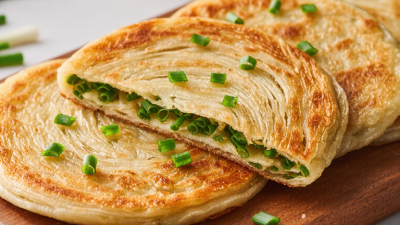
Green onion pie suppliers usually fall into three groups: frozen-food manufacturers, regional bakeries, and contract producers serving food businesses. Manufacturers may handle larger orders and frozen shipping, while bakeries can offer fresher regional styles or smaller batches. Contract producers may adjust pastry thickness, filling ratios, and packaging. Ask which tasks they perform in-house; “supplier” can mean a maker or simply a reseller.
Search through wholesale food directories, regional trade fairs, food-service distributors, and referrals from restaurant operators. Use specific terms such as “frozen scallion pie manufacturer” or the local name for the dish. Search results are only a starting point. Check whether each candidate supplies your market, provides export-ready product information, and can explain its production capacity. A nearby distributor may be easier to sample, but its storage conditions still matter.
Request a sample and a written specification before comparing prices. Check pastry layers, onion aroma, cooking instructions, unit weight, minimum order, and frozen delivery temperature. Ask about ingredient controls and allergen documentation, then compare answers with the documents provided. One easy mistake is treating a polished catalog as proof of reliable production. It is not. If samples vary in size or filling, ask how batches are checked; small details can change cooking time and customer expectations.
How to Find Green Onion Pie Suppliers in 2026?
Assess Food Safety, Quality, and Production Capacity
A dependable supplier should explain how ingredients move from receiving to finished pies. Ask for lot-level records for flour, oil, and fresh green onions. Check how the facility controls handwashing, cleaning, and cross-contact with common allergens. If pies are shipped chilled or frozen, request written temperature checks and handling procedures. Paperwork can look tidy. It is not proof by itself.
Review the product, not just the specification sheet. Request samples from more than one production batch, then compare crust color, filling distribution, and onion flavor after baking. Look for soggy centers, burnt edges, or a sharp change in texture after storage. Ask how recipe changes are approved and recorded. A small inconsistency may be normal, but repeated differences deserve a closer look.
Production capacity needs evidence too. Confirm normal output per shift, current lead times, minimum order quantities, and how the supplier handles seasonal demand. Ask whether key steps rely on one machine or a single production line. A site visit or independent audit can help verify what sales materials cannot show. Still, a visit captures only one day, so check recent records and speak with the production team. The best fit is not always the largest factory; it is one that can meet your forecast without weakening its safety checks or product consistency.
Use this scorecard to compare potential suppliers. Benchmarks marked “suggested” are buyer screening targets, not universal legal requirements; confirm product specifications and applicable rules for the destination market.
| Assessment Area | What to Check | Evidence to Request | Suggested Screening Benchmark | Score |
|---|---|---|---|---|
| Food safety system | Hazard analysis, preventive controls, monitoring, corrective actions, and recordkeeping. | Current food-safety plan; audit report or certificate, where applicable; recent corrective-action records. | Controls should address biological, chemical, and physical hazards relevant to the product and process. Verify compliance with the rules in the manufacturing and destination markets. | / 5 |
| Regulatory alignment | Whether the facility follows applicable food-manufacturing requirements. | Facility registration or local licensing documents, where required; regulatory inspection history; documented procedures. | For U.S.-bound food, check applicability of FDA 21 CFR Part 117, including current good manufacturing practice and preventive-control requirements. Requirements vary by facility and product. | / 5 |
| Allergen management | Ingredient declarations, cross-contact controls, and label review. | Full recipe and allergen matrix; line-changeover and cleaning records; packaging-label proof. | Confirm declared allergens against the actual recipe and destination-market rules. Wheat is commonly present in pastry; other allergens depend on the recipe and facility. | / 5 |
| Ingredient traceability | Lot identification and the ability to trace ingredients and finished products. | Sample traceability records, supplier-approval procedure, and mock-recall results. | Request a documented one-step-back/one-step-forward traceability process and a mock-recall exercise. Set a response-time target in the purchasing agreement. | / 5 |
| Product specifications | Recipe, dimensions, weight, filling ratio, cooking instructions, and packaging format. | Signed product specification; ingredient statement; product photos; sample evaluation results. | Agree measurable tolerances for unit weight, diameter, thickness, green-onion content, and appearance before approving production. There is no single universal specification for green onion pie. | / 5 |
| Quality consistency | Variation between batches in shape, browning, filling distribution, and texture. | Recent batch records, in-process inspection plan, finished-product checks, and retained-sample policy. | Approve a reference sample and written acceptance criteria; verify results across multiple production lots rather than relying on a single sample. | / 5 |
| Microbiological controls | Risk-based sampling and testing appropriate to ingredients, process, and intended use. | Testing plan, laboratory reports, sampling frequency, and procedures for out-of-specification results. | Ask the supplier to explain the hazards covered and test methods used. Establish product-specific limits with a qualified food-safety professional and applicable regulations. | / 5 |
| Frozen-chain handling | Freezing process, storage conditions, loading practices, and shipment temperature control. | Storage and transport procedures; temperature logs; shipment monitoring and deviation records. | For a frozen product, a commonly used storage and transport target is −18°C (0°F) or colder. Agree on monitoring, excursion handling, and delivery acceptance criteria. | / 5 |
| Shelf-life validation | Whether the stated shelf life is supported for the actual recipe and packaging. | Shelf-life study or documented technical rationale; packaging specification; storage-condition statement. | Check that the validated period covers the planned shipping, customs, warehousing, and retail timeline. Do not assume shelf life from a similar product. | / 5 |
| Production capacity | Available output, current utilization, shift pattern, and ability to meet peak demand. | Rated and actual output by shift; recent production schedule; capacity allocation and contingency plan. | Compare verified available capacity with forecast demand, including seasonal peaks and buffer stock. Set monthly volume, lead time, and minimum-order quantity in writing. | / 5 |
| Equipment and process control | Mixing, sheeting, forming, cooking or par-cooking, freezing, and packing capabilities. | Process flow diagram; equipment list; preventive-maintenance and calibration records. | Confirm the process can repeatedly meet the approved product specification and that critical monitoring equipment is calibrated and maintained. | / 5 |
| Packaging and labeling | Pack integrity, food-contact suitability, label accuracy, and case-pack format. | Packaging material specifications; label artwork; seal or pack-integrity checks; carton dimensions and weights. | Verify required language, ingredient and allergen declarations, net quantity, lot coding, storage instructions, and other destination-market requirements before production. | / 5 |
| Delivery performance | Lead time, order flexibility, on-time delivery, and damage or temperature-deviation rates. | Recent on-time-in-full records; shipment claims history; service-level and escalation procedures. | Agree measurable service targets, order cut-off times, delivery windows, and remedies for shortages or nonconforming shipments. | / 5 |
| Commercial readiness | Pricing basis, minimum order quantity, payment terms, and change-control process. | Written quotation; itemized logistics assumptions; draft specification and quality agreement. | Compare total delivered cost, not unit price alone. Require advance approval for changes to ingredients, process, facility, packaging, or specifications. | / 5 |
| Overall decision | Combine food-safety, product-quality, capacity, and commercial findings. | Completed scorecard, approved sample, risk review, and signed specifications. | Suggested method: score each area from 1 (not demonstrated) to 5 (verified and consistently controlled). Resolve critical safety or compliance gaps before placing a production order. | / 65 |
Compare quotes on a landed-cost basis, not just price per carton. Ask suppliers for the unit price, minimum order, packaging dimensions, and freight terms. Then add insurance, customs duties, inspection fees, and local delivery. A low factory price can lose its appeal after a long refrigerated journey. Request a sample and check the pastry’s crispness, onion aroma, and thawing instructions.
Delivery reliability matters. Ask for production lead time, shipping temperature, carton labeling, and a recent shipment record. FAO’s Food Loss Index estimated that 13.2% of food was lost globally between harvest and retail in 2021. That broad figure is not a frozen-pie loss rate, but it shows why handling deserves scrutiny. For imports into the United States, verify product classification, facility and importer obligations, prior-notice requirements, and English labeling with official agencies or a qualified customs professional. Requirements vary by destination and recipe.
Tips: Compare at least three written quotes using the same shipment size and delivery term. Ask who pays if a shipment arrives late or outside its agreed temperature range. Small details matter. Supplier paperwork can still be incomplete, so allow time to verify it before ordering.
Request production-line samples, not showroom pieces. Bake them using your own oven settings, then check crust color, filling distribution, onion aroma, and leakage after cooling. Repeat the test with a second batch. One sample proves little. Ask for ingredient and allergen declarations, lot codes, and written storage limits; compare these with the product specification. The FAO’s 2019 State of Food and Agriculture estimated that 14% of food is lost between post-harvest and retail. That broad estimate is not specific to pies, but it underscores why handling and delivery controls deserve scrutiny.
Arrange an on-site or independent audit, and examine what staff actually do: handwashing, cleaning records, temperature checks, and separation of raw ingredients from finished pies. Verify corrective actions, not just certificates. A neat binder can hide a messy shift. Put measurable terms in the contract, including pie weight, filling ratio, acceptable breakage, packaging, shipment temperature, delivery windows, and remedies for rejected lots. Define who keeps traceability records and who contacts buyers during a recall. Keep a signed sample and approved specification for comparison. Some details will still be missed; review the first shipments closely and revise the checklist when reality disagrees with the paperwork.